🔍 Executive Summary
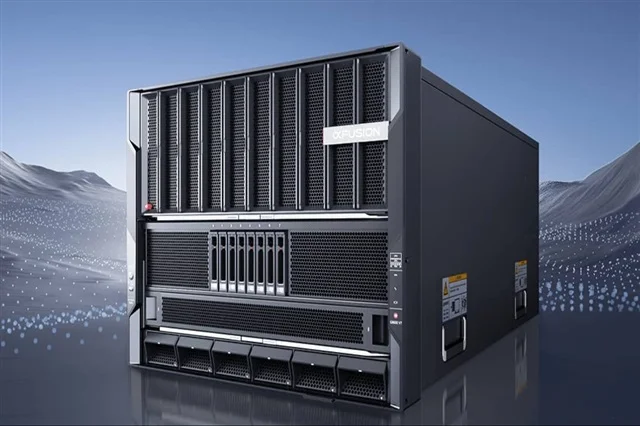
- xFusion, the server entity formerly under Huawei, has posted a significant revenue of CNY 58.2 billion for 2025. This growth underscores China's success in fostering a domestic AI supply chain, with xFusion acting as a primary integrator for localized high-end server solutions amidst global trade restrictions.
Strategic Deep-Dive
The financial trajectory of xFusion, which reached a revenue milestone of CNY 58.2 billion (approx. USD 8.6 billion) in 2025, provides a critical window into the rapid evolution of China’s domestic technology sector. To understand xFusion’s rise, one must look at its lineage as the former x86 server business unit of Huawei.
Following its divestiture to ensure survival amidst tightening US sanctions, xFusion has transformed into a sovereign champion of Chinese computing infrastructure. This revenue surge is not merely a byproduct of general market growth but is the result of a strategic mandate to localize every layer of the AI stack. As international vendors face increasing barriers to the Chinese market, xFusion has effectively captured the vacuum, positioning itself as the premier integrator for high-end enterprise and government server deployments.
In the context of global supply chain decoupling, xFusion’s role is that of a ‘systemic bridge.’ While the core logic—high-end GPUs—remains a point of contention due to export controls, xFusion has pioneered the integration of domestic accelerators from firms like Biren Technology and Moore Threads into production-ready rack solutions. This requires immense technical expertise in firmware development, interconnect optimization, and power management to achieve performance parity with Western systems. Their success in 2025 highlights a significant pivot toward high-margin AI servers, which now constitute a major portion of their portfolio.
By participating in China’s ‘East-to-West Computing’ initiative, xFusion is not just selling hardware; it is deploying the backbone of a national AI strategy that prioritizes resilience over reliance on global integrated circuits.
The sustainability of xFusion’s growth will depend on its ability to navigate the complexities of a fractured global ecosystem. As a Lead Systems Architect would observe, the challenge for xFusion is maintaining a competitive performance-per-watt ratio while using potentially less efficient domestic silicon. However, by optimizing at the system level—utilizing advanced liquid cooling techniques and proprietary interconnect fabrics—xFusion is demonstrating that architectural innovation can partially compensate for node-level disadvantages.
The company’s massive revenue growth suggests that the Chinese domestic market is now large enough to sustain a multi-billion dollar hardware ecosystem in isolation. For global observers, xFusion serves as a primary case study of how localized industrial policy can successfully catalyze a high-tech manufacturing sector into a formidable regional power, even under severe geopolitical pressure. As we move toward 2027, xFusion is likely to expand its influence beyond China, targeting markets in Southeast Asia and the Middle East where sovereign AI infrastructure is becoming a key national priority.