🔍 Executive Summary
- AMD is aggressively repositioning itself as a comprehensive AI ecosystem provider, leveraging its dual strength in CPU and GPU architectures to challenge Nvidia's market hegemony through technical 'platformization.'
Strategic Deep-Dive
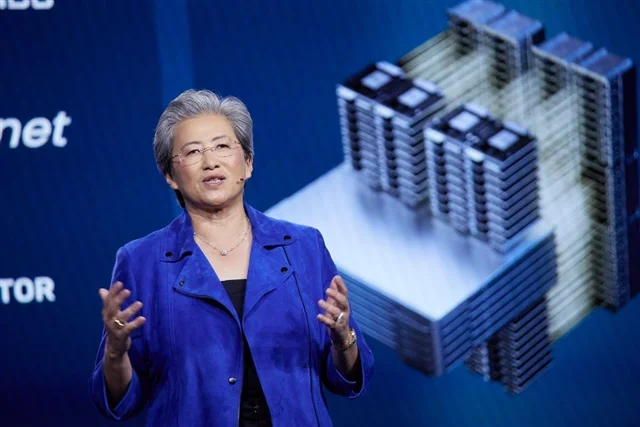
Under the visionary leadership of CEO Lisa Su, AMD is undergoing a profound and necessary transformation, moving beyond its historical identity as a challenger in the CPU and GPU markets to become a comprehensive architect of the AI era. This strategic pivot mirrors the ‘platformization’ strategy long championed by Nvidia’s Jensen Huang, who has consistently argued that silicon is merely the foundation of a much larger software and hardware ecosystem. AMD’s current trajectory is a direct response to this industry reality, as the company seeks to integrate its hardware prowess into a seamless AI solution stack that can compete with the entrenched CUDA moat.
The core of AMD’s competitive advantage lies in its unique ability to harmonize high-performance central processing units (CPUs) with cutting-edge graphics processing units (GPUs). While Nvidia remains the dominant force in standalone GPU compute, AMD is betting that the future of large-scale AI infrastructure will favor architectures where the CPU and GPU are not disparate components but a unified computing engine. By leveraging its EPYC server processors alongside the Instinct MI300 series accelerators, AMD provides cloud service providers with a synergistic platform that optimizes data movement, reduces latency, and maximizes energy efficiency—a critical factor as data center power consumption reaches unprecedented levels.
Furthermore, the integration of the ROCm (Radeon Open Compute) software stack is pivotal to this strategy. AMD is investing heavily in ensuring that its software layer can provide the same level of accessibility and performance optimization that developers have come to expect from Nvidia’s ecosystem. This shift toward a ‘platform-first’ mentality signifies a move away from competing on raw hardware specifications alone toward providing a robust, scalable environment for the next generation of generative AI models.
The industry context is shifting; customers are increasingly wary of vendor lock-in and are actively seeking alternatives that offer comparable performance without the restrictive ecosystem of a single supplier.
The projected impact of this transition is significant for the global semiconductor landscape. As AMD scales its ‘platformization’ efforts, it exerts downward pressure on market pricing and accelerates the pace of architectural innovation. For data center operators and enterprise AI developers, the emergence of a viable, integrated alternative to Nvidia means greater flexibility in infrastructure design.
If AMD successfully navigates the technical hurdles of software-hardware optimization and maintains its lead in chiplet-based manufacturing, it will not only secure a larger share of the AI compute market but will also redefine the standards for high-performance computing in the 21st century. The battle for AI supremacy is no longer just about who has the fastest chip; it is about who provides the most comprehensive and efficient platform for the intelligence of the future.