🔍 Executive Summary
- Despite Nvidia CEO Jensen Huang's optimism regarding future chip exports, US trade restrictions continue to weaken Nvidia's market position in China, allowing domestic rivals like Huawei to aggressively capture the resulting void in the AI chip sector.
Strategic Deep-Dive
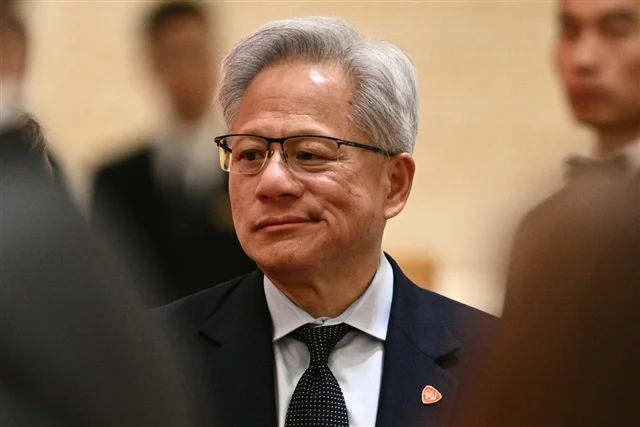
The competitive landscape of the Chinese AI chip market is undergoing a seismic shift, driven by the persistent pressure of US export controls. While Nvidia CEO Jensen Huang has publicly expressed hope that authorities will eventually ease restrictions on the import of high-end US AI chips, the current reality on the ground tells a much more challenging story for the California-based giant. Nvidia, which once enjoyed near-total dominance in the Chinese data center market, is finding its position increasingly compromised.
The forced downgrading of its hardware to comply with US Department of Commerce regulations has not only diminished its performance advantage but has also opened a strategic window for domestic competitors who are unencumbered by such international restrictions.
Leading this domestic charge is Huawei Technologies. Long seen as a target of international sanctions, Huawei has leveraged its deep expertise in telecommunications and internal silicon design to produce AI chips that are increasingly seen as viable, and sometimes preferred, alternatives to Nvidia’s downgraded offerings. The erosion of Nvidia’s market share is not merely a byproduct of availability; it is a result of a concerted effort by Chinese enterprises to diversify their supply chains and mitigate the geopolitical risk of being dependent on a single American supplier.
As long as Nvidia is prohibited from selling its top-tier silicon—such as the H100 or its successors—Huawei and other local suppliers are aggressively capturing the vacuum. This transition is being supported by a nationalistic push for technological self-reliance, which incentivizes Chinese tech giants to optimize their software stacks for domestic hardware, thereby creating a new ecosystem that is independent of Nvidia’s software moats.
The long-term viability of Nvidia’s China strategy is now being called into question by industry analysts. Even if export controls were to be lifted in the near future, Nvidia faces a market that has fundamentally changed. Software ecosystems are seeing increased competition from localized alternatives as developers migrate their workloads to domestic platforms.
Once a developer ecosystem begins to adapt to a different hardware architecture, the friction of switching back to a previous standard becomes a significant barrier to entry. Therefore, every month that Nvidia is restricted from providing its best technology to the Chinese market provides Huawei and its peers with more time to solidify their positions, improve their yields, and refine their software support. This represents a permanent shift in market dynamics rather than a temporary disruption.
Furthermore, the geopolitical tension in the AI chip sector has turned hardware into a primary instrument of statecraft. The ‘paradox of sanctions’ is clearly visible here: by attempting to limit China’s AI capabilities, the US has inadvertently accelerated the development of a rival semiconductor ecosystem that may eventually operate entirely outside of Western influence. Nvidia finds itself caught in the middle of this struggle, trying to maintain a presence in its largest market while adhering to the mandates of its home government.
The outcome of this struggle will likely determine the technological balance of power for the next decade. If Huawei and local suppliers can sustain their current trajectory of hardware performance and software integration, they may not just be ’local rivals’ but could emerge as a global alternative to the current AI silicon monopoly, fundamentally altering the global tech architecture.